Volatile memory prices: Why platform strategy matters now
13. February 2026 | Planegg
Persistent market distortions have been shaping the international memory market for around a year. In the case of DRAM in particular, severe shortages and the associated price corrections by memory manufacturers are having a direct impact on the price development of memory-intensive board products.
This affects almost all embedded platforms – including Raspberry Pi.
However, the decisive factor is not that prices are rising, but how platform providers and partners deal with this.
In volatile markets, the focus shifts away from short-term price lists and toward predictability, transparency, and technical controllability.
This is precisely where a pure product decision differs from a genuine platform decision.
Raspberry Pi remains a very strong choice. The price-performance ratio is still exceptional – especially given that no manufacturer can currently escape developments in the memory market if they want to guarantee delivery.
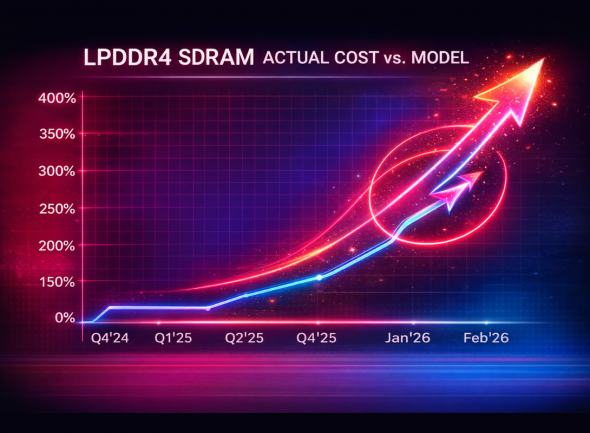
It is important to note that Raspberry Pi does not react in isolation to the price. Extensive engineering activities are running in parallel – from new hardware variants to software and OS optimizations to the qualification of additional memory chips. This work requires considerable development resources and will create more flexibility again in the medium term.
A key strategic advantage lies in the close control over hardware, software, and essential parts of production. This depth makes it possible to respond to market fluctuations in a structured manner rather than just compensating in the short term.
Astradis supports OEMs in classifying these developments and making them manageable at the project level. In close coordination with our customers and Raspberry Pi, we are working on sensible adjustments and implementations for the current situation.
Price fluctuations are a market reality.
Platform strategy, engineering depth, and long-term planning are the answer.