Raspberry Pi Camera Module 3 Sensor Assemblies for more compact OEM camera designs
09. January 2026 | Planegg
AVAILABLE NOW FROM $15: RASPBERRY PI CAMERA MODULE 3 SENSOR ASSEMBLIES
Since its launch, the 12-megapixel autofocus Raspberry Pi Camera Module 3 has been adopted across enthusiast projects and a wide range of industrial and embedded applications.
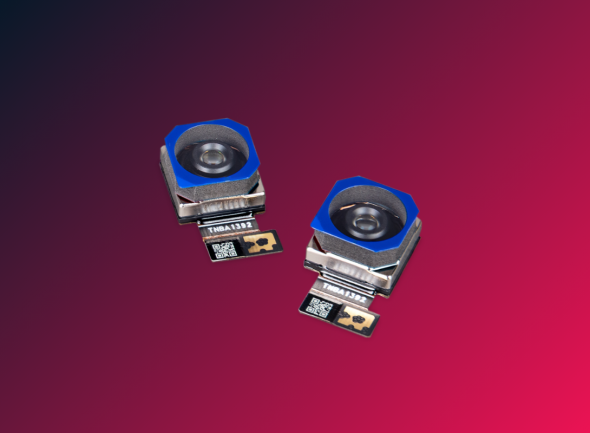
Raspberry Pi has now introduced Camera Module 3 Sensor Assemblies for customers who want to integrate the same imaging technology into smaller form factors than the 25 × 24 mm module footprint. The sensor assemblies are available as standalone products, priced from $15.
Camera Module 3 Sensor Assemblies use the same Sony IMX708 (4608 × 2592, 11.9 megapixel) sensor with 1.40 µm pixels and Phase Detection Autofocus (PDAF) as Camera Module 3. To support custom carrier designs, Raspberry Pi provides reference schematics and a bill of materials for integrating the required support components on your own PCB.
Variants and pricing (from)
The assemblies are offered in four variants: visible-light or NoIR, and standard (75° diagonal) or wide (120° diagonal) field of view, with a $10 price difference between standard and wide variants.
- Camera Module 3 Sensor Assembly, $15
- Camera Module 3 Sensor Assembly NoIR, $15
- Camera Module 3 Sensor Assembly Wide, $25
- Camera Module 3 Sensor Assembly Wide NoIR, $25
FOR OEM PLANNING: Raspberry Pi states that the sensor assemblies will remain in production until at least January 2030.
If you want to integrate Camera Module 3 Sensor Assemblies into your own hardware design, the Astradis team will support you from platform selection and sourcing through integration guidance for your target form factor.
>> Contact us now for more information and an individual consultation.
FAQ
Who are Camera Module 3 Sensor Assemblies best suited for?
For OEMs and developers who want to integrate the image quality and autofocus performance of Camera Module 3 into a custom, more compact hardware design, especially where space constraints or tailored enclosures require a smaller footprint.
Which variants are available, and what are the differences?
There are four variants: visible light or NoIR, each available with a standard (75° diagonal) or wide (120° diagonal) field of view. Wide variants are priced $10 higher than the corresponding standard variants.
What do I need to integrate the sensor assembly on my own carrier board?
Raspberry Pi provides reference schematics and a bill of materials to implement the required support components on your own PCB. For OEM planning, Raspberry Pi states the sensor assemblies will remain in production until at least January 2030.