Multilingual Voice Assistance as a Building Block
29. January 2026 | Planegg
Voice assistance has long been more than a nice living-room feature. Used correctly, it becomes a real tool: it explains, supports, translates, learns over time – and works wherever hands, eyes, or time aren’t available.
A new generation of multilingual, dialog-capable voice assistants demonstrates just how flexible and practical this technology already is today – from everyday private use to industrial applications.
Using a Raspberry Pi and ElevenLabs Conversational AI, it’s possible to build a voice assistant that runs fully hands-free, can be individually configured, and communicates in multiple languages – in real time.
Astradis Elektronik does not view such voice-assistant solutions as an isolated demo, but as an example of how compact platforms can support real work, learning, and service processes – structured, scalable, and ready for practical use.
Where Multilingual Voice Assistance Creates Real Value
In industry, service, and professional environments
- Service & maintenance:Technicians can ask directly at the machine about error codes, inspection steps, or recommended actions – without searching through documents.
- International teams: One assistant, multiple languages – ideal for mixed workforces or global sites.
- Training & onboarding: Step-by-step instructions via dialogue, adapted to experience level and language.
- Hands-free operation: Especially relevant where gloves, tools, or movement make traditional interfaces difficult to use.
In private everyday life
- Learning languages as part of daily life: Short dialogues in between, pronunciation practice, spontaneous questions – no app, no screen.
- Accessibility & inclusion:Retrieve information, have content read aloud, or get tasks explained – by voice, anytime.
- Personal assistant: Voice reminders or quick knowledge checks: “Remind me tomorrow at 9 about the meeting” or “What does term X mean?”
The real strength isn’t just “speaking” – it’s understanding, asking follow-up questions, and using context: true conversation.
Practical Example: Voice Assistance Directly on the Production Line
An employee is standing at a machine.
They say: “Hey Eleven, what does error 37 mean?”
The assistant responds immediately, explains possible causes, and asks targeted follow-up questions about additional symptoms. If desired, it also summarizes the situation in English – for a remote service technician or for documentation.
No display. No keyboard. No interruption of workflow.
Just a natural dialogue between people and systems.
Technology as an Enabler – Deliberately Kept Simple
The solution combines compact hardware with powerful voice AI.
Required components (example setup):
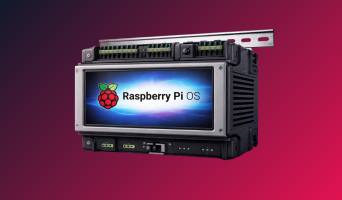
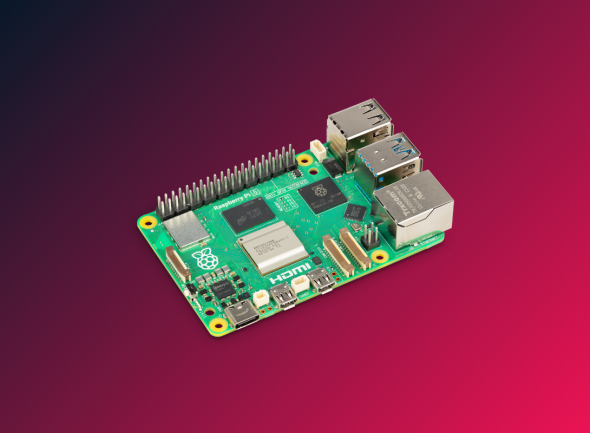
- Raspberry Pi (e.g., Raspberry Pi 5)
- Microphone and speaker (e.g., combined in a Bluetooth device)
- Internet connection
- An ElevenLabs account with API access
Core implementation principles:
- Activation via a freely definable hotword
- Local audio capture on the Raspberry PiHow Astradis Elektronik Supports Developers and Companies
- Processing and voice output via ElevenLabs Conversational AI
- Multilingual capability and voice character configured centrally
Result: a flexible, adaptable voice assistant that can be tailored to a wide range of requirements – from prototype to near-production application.
How Astradis Elektronik Supports Developers and Companies
- Selecting and providing suitable Raspberry Pi–based systems
- Support with project setup and component selection
- Consulting on practical use cases in industry, education, and development
- Help transitioning from prototype to a stable solution
- Technical point of contact for developers, system integrators, and product teams
This turns an idea into a working application – and technology into real value.
Full Build Instructions and Project Repository